Autistic burnout is not a failure of character; it is a physiological collapse born from existing in a world not designed for your nervous system. It is the cumulative debt of “masking”—suppressing your natural autistic traits to fit in—until the body simply refuses to perform anymore.
I remember the distinct texture of the day my own capacity crumbled. It wasn’t a dramatic explosion, but a quiet, terrifying silence. I was standing in the kitchen, the hum of the refrigerator sounding like a jet engine against my ears. I tried to speak, to ask for water, but the words were heavy stones in my throat. I had lost my speech. It wasn’t that I was tired; it was that my operating system had shut down to protect the hardware. I realized then that sleeping for a week wouldn’t fix this. I didn’t need sleep; I needed the cessation of sensory violence.
This article is a sanctuary for the neurodivergent soul. It explores autistic burnout not as a medical defect, but as a desperate plea from your body for Somatic Safety. We will explore why standard “self-care” often fails—sometimes leading to Post-AI Burnout due to digital overwhelm—and how to build a life that honors your unique wiring.
The Invisible Cost of Masking: Why You Are Truly Exhausted
Standard burnout comes from doing too much work. Autistic burnout comes from doing too much being.
For years, you may have unknowingly engaged in high-effort masking—forcing eye contact, suppressing stims, and intellectually processing social cues that others process intuitively. This burns through your cognitive energy reserves at a rate far higher than the average person.
Eventually, you hit a wall. This often manifests as Skill Regression: suddenly, you cannot cook, drive, or speak as well as you used to. This is terrifying, but it is temporary. Your brain has simply diverted energy from “doing” to “surviving,” a process often uncovered through deep Shadow Work journal prompts.
As social psychologist Dr. Devon Price, author of Unmasking Autism, states:
“Burnout is the result of trying to live a life that was not made for you. Healing requires dismantling the mask and building a life that actually fits.”
Somatic Rituals for Autistic Burnout Recovery
To heal, we must move beyond “rest” (lying in bed worrying) to “restoration” (active regulation). Here are two signature rituals to signal safety to your body.
1. The Sensory Blackout
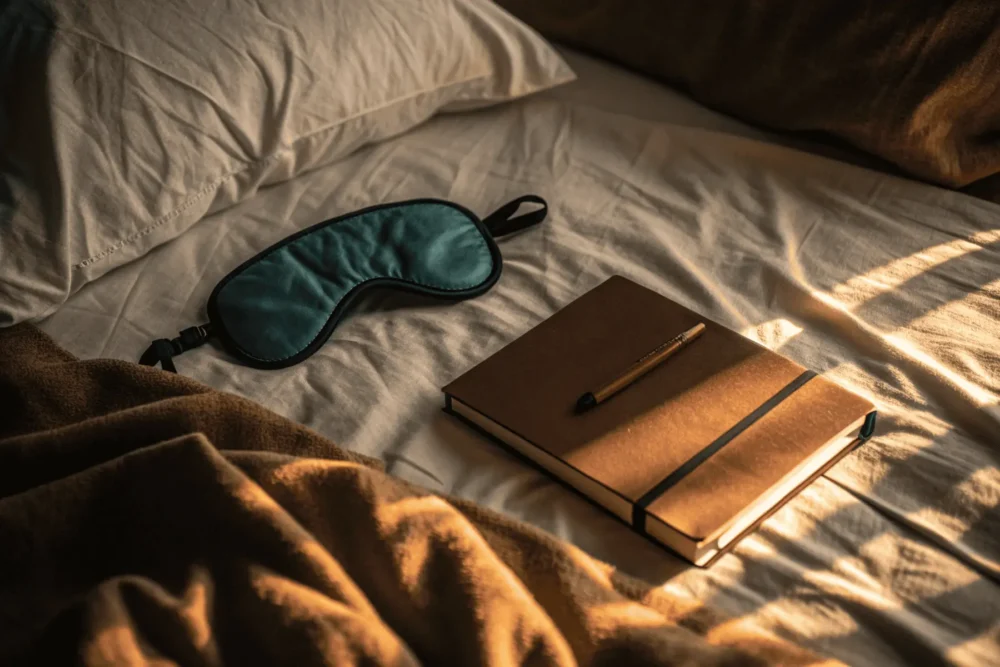
If your brain is processing light and sound, it is not resting.
- The Concept: Create a total “Zero-Input” environment to allow your sensory processing system to catch up.
- The Practice: Find a closet or a small, safe room. Use blackout curtains or a heavy eye mask. Wear noise-canceling headphones (with no music, just silence or white noise). Lie under a weighted blanket. Stay here for 20 minutes. This is not sleep; it is Sensory Fasting. It creates the digital light fasting effect for your entire nervous system.
2. Stimming as Medicine

Society told you that fidgeting was “wrong.” Your body knows it is regulation.
- The Concept: Repetitive movement releases the tension of the mask.
- The Practice: Engage in “Joyful Stimming.” Rock back and forth, flap your hands, hum a low tone, or use a texture you love. Do this intentionally for 5 minutes. Feel how the energy loop in your body closes. This is your nervous system healing itself through motion.
The “Dopamine Menu” vs. The To-Do List
In the depths of autistic burnout, executive function (the ability to plan and execute tasks) is offline. A To-Do list feels like a threat.
We replace this with the Dopamine Menu, treating sensory inputs like comforting soul food.
Instead of forcing yourself to work, you create a menu of sensory glimmers that provide “low-demand” dopamine.
- Appetizers (Quick): Petting the cat, smelling lavender, a sip of cold water.
- Entrees (Deep): Engaging in your special interest for an hour without guilt.
- Sides (Sensory): Wearing your softest clothes (removing “hard pants”).
This approach rebuilds your energy reserves by focusing on pleasure and safety rather than output.
From Regression to Sanctuary: The Transformation
Recovery from autistic burnout is not about returning to your old self (the one who burned out). It is about meeting your authentic self.
The transformation occurs when you stop apologizing for your needs. You realize that your need for silence, for specific textures, or for solitude is not a “preference”—it is a medical necessity for your functioning. You move from a life of Performance to a life of Sanctuary, finding what we call Narrative Rest—a break from the exhausting story of trying to be “normal.”
Inquiries for the Unmasking Soul
Open your journal—perhaps one with unlined paper to reduce visual demand—and explore these questions gently.
- Which “normal” daily activities drain my battery the fastest? (Grocery shopping, phone calls, bright lights).
- If I didn’t have to perform “human” for anyone today, how would my body naturally want to move or sit?
- What texture, sound, or smell makes me feel instantly safe?
📌 The Autistic Recovery Manifesto
(Do not just read these laws. Embody them. Save this section to your “Neurodivergent Self-Care” board and join our visual sanctuary on PeaceScroll Pinterest for daily validation.)
Here are the 5 Laws of Somatic Safety, paired with a micro-ritual to protect your energy.
Law 1: The Battery Check
“I do not guess my energy; I respect my reality. If I am at 10%, I do not give 50%.”
- ⚡ When to use it: When someone asks you to go out, but you feel heavy.
- 🌑 The Somatic Action: Close your eyes. Visualize your internal battery. If it is red, say “No” immediately. Do not negotiate. This is a key soft resistance ritual.
Law 2: The Sensory Shield
“My sensitivity is not a flaw. I curate my environment to protect my peace.”
- ⚡ When to use it: In a loud store or busy office.
- 🌑 The Somatic Action: Put on your headphones or sunglasses indoors. Validate your need for a buffer between you and the world.
Law 3: The Mask Drop
“I release the need to perform facial expressions that do not match my feelings.”
- ⚡ When to use it: When you are alone or with safe people.
- 🌑 The Somatic Action: Let your face go completely slack (the “Flat Affect”). Feel the muscles in your jaw and forehead relax. Rest in the neutrality.
Law 4: The Special Interest
“My joy is my fuel. Diving deep into what I love is how I recharge.”
- ⚡ When to use it: When you feel guilty for spending hours on a hobby instead of “working.”
- 🌑 The Somatic Action: Set a timer for 30 minutes. Immerse yourself in your topic. Let the dopamine flood your system. This is productive healing.
Law 5: The Regression Mercy
“If I lose a skill today, I trust it will return tomorrow. I am gentle with my fluctuations.”
- ⚡ When to use it: When you drop something or can’t find the right word.
- 🌑 The Somatic Action: Place a hand on your heart. Say: “I am currently offline for maintenance. I will be back soon.”
A Soft Closing & An Invitation to Quietude
Healing from autistic burnout is a long, non-linear journey. It is the brave act of building a life that accommodates your humanity rather than crushing it. By prioritizing somatic safety over societal expectations, you don’t just recover; you discover the vibrant, unique life that was waiting behind the mask.
If you wish to find more tools for gentle living and nervous system regulation, I invite you to join us in the PeaceScroll Circle.
This is not a marketing list. It is a weekly Letter of Quietude & Clarity, sent from my sanctuary to yours. It is a moment of pause in your inbox, offering guidance on slow living rituals and neuro-somatic healing.
Frequently Asked Questions (FAQ)
What are the main symptoms of autistic burnout?
Key symptoms include skill regression (losing the ability to speak, cook, or socialize), chronic exhaustion that sleep doesn’t cure, and increased sensory sensitivity (lights and sounds become painful). Unlike regular stress, it is characterized by a complete collapse of executive function and the inability to maintain “masking” behaviors.
How long does it take to recover from autistic burnout?
Recovery is non-linear and varies from months to years depending on the severity. The timeline relies heavily on how drastically you can reduce demands and increase somatic safety. Pushing through the fatigue or trying to “bounce back” to previous productivity levels often prolongs the burnout cycle.
Is autistic burnout the same as depression?
They can look similar (withdrawal, fatigue), but the root cause is different. Depression is often a mood disorder treated with activation, whereas autistic burnout is a nervous system collapse caused by the long-term strain of masking and sensory overwhelm. Treating burnout with standard depression tools (like “forcing yourself to go out”) can actually cause further harm.
Can I recover from autistic burnout while working full-time?
It is difficult but possible if you radically adjust your non-work hours. Recovery requires a strict “Sensory Diet”: using noise-canceling headphones, reducing social obligations to zero, and utilizing the “Sensory Blackout” ritual immediately after work to discharge the accumulated stress of the day.