I remember the distinct, hollow feeling of a rainy Sunday afternoon. The light was grey and soft, perfect for reading or painting. Yet, I found myself paralyzed on the sofa, thumb scrolling endlessly through 15-second videos. My body was safe, but my nervous system was frantic, binge-eating digital sugar while my soul starved for a real meal. I wasn’t happy, I wasn’t resting; I was numbing. The texture of the velvet cushion under my hand felt real, but my mind was miles away in a cloud of pixels. I realized then that I had forgotten how to feed myself anything other than distraction.
This is the essence of a Dopamine menu. It is a personalized, curated list of stimulating activities designed to rescue your nervous system from the “Doom Scroll” loop by offering satisfying alternatives to easy digital hits. Instead of reaching for your phone by default, you reach for a menu of options that actually nourish you.
This article is not a productivity guide; it is a sanctuary for your attention. It is a reclamation of your capacity to choose conscious pleasure over unconscious consumption, turning your free time from a void into a feast.
The Hunger for Distraction: Why We Binge on Empty Calories
In a world of cheap, instant gratification—scrolling, sugar, notifications—our brains have forgotten how to seek true satisfaction. We are biologically wired to seek dopamine (the molecule of “more”), but modern technology has hijacked this system.
We are fed a diet of “digital junk food.” Just as eating candy all day leaves you feeling sick and empty, consuming only short-form content leaves you in a state of Post-AI Burnout. We feel overstimulated yet under-nourished.
Creating a Dopamine menu is the act of recognizing that your boredom is not a problem to be solved with a screen. It is an appetite. And like any appetite, it deserves a real meal, not just a snack that leaves you hungrier than before.
Curating Your Personal Dopamine Menu for Joy
To break the cycle of “functional freeze” and scrolling, we must make the healthy choice as easy as the unhealthy one. We do this by externalizing our options. Here are two signature rituals to build your menu.
1. The “Menu” Physicality
A menu in your head doesn’t work; the phone is too fast. You need a physical object.
- The Ritual: Take a piece of thick, textured paper. Write down your lists (Starters, Mains, etc.) with a beautiful pen. Tape this menu to the back of your phone case, your fridge, or your desk.
- The Shift: When the urge to scroll hits, your eyes must physically cross the menu before they hit the screen. This micro-pause is where your freedom lives.
2. The Appetizer Alert
We often doom-scroll because we don’t have the energy for a big task.
- The Ritual: When you feel the “itch” to check a notification, glance at your Dopamine menu and pick a “Starter.” Just one.
- The Action: Do a 5-minute stretch, pet the dog, or drink a glass of water. This small hit of real dopamine often breaks the paralysis loop, allowing you to move on to something bigger without the guilt.
The Psychology Behind a Successful Dopamine Menu
To make this work, we use the Restaurant Metaphor. We categorize stimulation so we don’t binge-eat “Dessert” when we need a “Main Course.”
- Starters (5-10 mins): Quick hits of joy to boost energy. (e.g., Putting on a favorite song, 5 minutes of Digital Light Fasting by closing your eyes, watering a plant).
- Mains (Deep Work/Flow): Activities that truly fill you up and leave you satisfied. (e.g., Painting, a long walk, cooking a menstrual phase meal, deep reading).
- Sides (Enhancers): Things you add to boring tasks to make them palatable. (e.g., Listening to a podcast while folding laundry, lighting a candle while working).
- Dessert (Treats): Social media, TV, or gaming. These are fine in moderation, but they are not the main meal. If you eat dessert for dinner, you will feel sick.
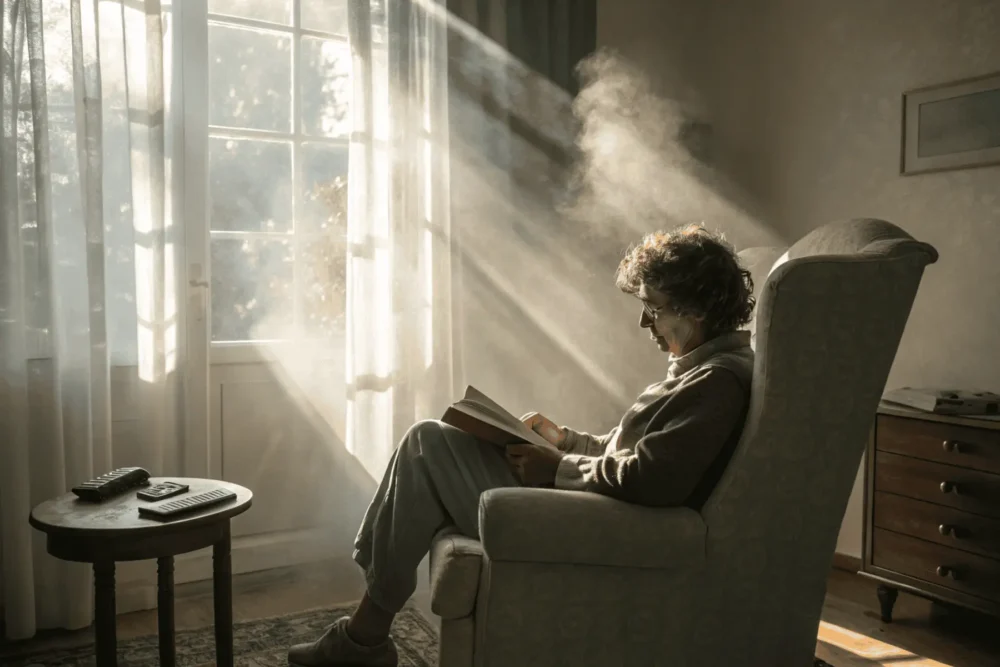
From Mindless Scrolling to Conscious Feasting
The transformation is the shift from reactive living to intentional living. You stop asking, “What will distract me?” and start asking, “What will nourish me?”
As Dr. Anna Lembke, author of Dopamine Nation, states:
“The pursuit of pleasure for its own sake leads to anhedonia—the inability to feel pleasure… We must find the balance between pleasure and pain to reset our reward pathways.”
When you choose a “Main Course” from your menu like Shadow Work or a creative hobby you engage in “effortful fun.” This creates a deeper, longer-lasting sense of well-being than the cheap, fleeting high of a like or a share.
Inquiries for the Hungry Soul
Open your journal perhaps one designated for cyclic clarity and explore these questions to design a menu that truly satisfies you.
- What activities make me lose track of time in a good way (Flow), versus a bad way (Zoning out)?
- How do I feel after 1 hour of scrolling versus 1 hour of creating? Describe the physical sensation.
- If I treated my attention like a guest of honor, what would I feed it today?
📌 The Dopamine Menu Manifesto: 5 Laws of Nourishment
(Do not just read these laws. Embody them. Save this section to your “Self-Care” board and join our visual sanctuary on PeaceScroll Pinterest for your daily menu inspiration.)
Here are the 5 Laws of the Dopamine Menu, paired with a somatic trigger to help you choose wisely.
Law 1: The Real over Digital
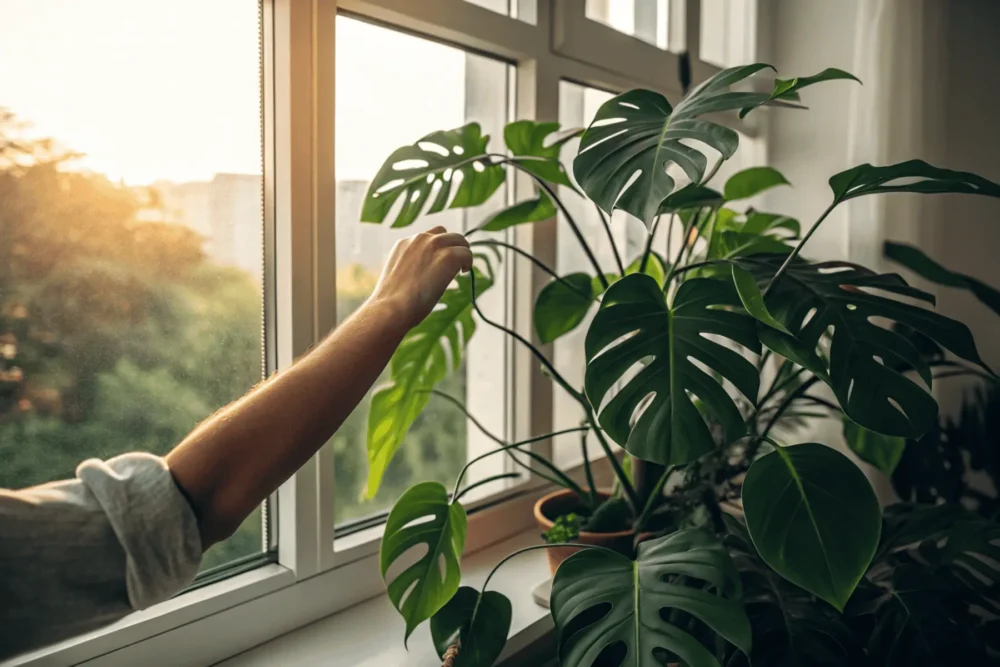
“I choose textures over pixels. I feed my senses, not just my eyes.”
- ⚡ When to use it: When you feel “bored” and reach for your phone automatically.
- 🌑 The Somatic Action: Touch something natural immediately (wood, water, a pet, a leaf). Ground yourself in the 3D world before making a choice.
Law 2: The Side Dish Rule
“I do not confuse a side dish with a main course. Distraction is a garnish, not a meal.”
- ⚡ When to use it: When you realize you’ve been “multitasking” for hours but haven’t done anything meaningful.
- 🌑 The Somatic Action: Turn off the background noise (music/podcast). Sit in silence for 1 minute. Ask: “What is the Main Course I am avoiding?”
Law 3: The Pause to Digest
“I wait for the check. I allow myself to feel satisfaction before seeking the next hit.”
- ⚡ When to use it: Immediately after finishing a task, before jumping to the next one.
- 🌑 The Somatic Action: Take a deep unfurling breath. Place a hand on your heart. Acknowledge the completion.
Law 4: The Conscious Dessert
“I eat dessert with a spoon, not a shovel. I enjoy my screens with intention, not compulsion.”
- ⚡ When to use it: When you decide to watch TV or scroll social media.
- 🌑 The Somatic Action: Set a timer. Say out loud: “I am choosing to enjoy this for 20 minutes.” When the timer rings, the meal is over.
Law 5: The Empty Table
“I am not afraid of an empty table. Boredom is the space where my creativity cooks.”
- ⚡ When to use it: When you have 5 minutes of waiting (in line, at a red light) and panic without your phone.
- 🌑 The Somatic Action: Keep your phone in your pocket. Look at the sky or the people around you. Let your mind wander. Taste the silence.
A Soft Closing & An Invitation to Quietude
Creating a Dopamine menu is an act of hospitality toward yourself. It is preparing a feast of life so that when the hunger of boredom strikes, you have something better to eat than the stale air of the internet.
If you wish to continue this journey of reclaiming your attention and finding richness in the analog world, I invite you to join us in the PeaceScroll Circle.
This is not a marketing list. It is a weekly Letter of Quietude & Clarity, sent from my sanctuary to yours. It is a moment of pause in your inbox, offering guidance on digital wellness, somatic rituals, and slow living.
Frequently Asked Questions (FAQ)
What is a Dopamine Menu?
A Dopamine Menu is a curated list of stimulating activities designed to provide the brain with healthy, satisfying dopamine hits, replacing the urge to doom-scroll. Originally popularized by the ADHD community (often called “dopamining”), it functions like a restaurant menu, offering different “courses” of stimulation—from quick appetizers to fulfilling main meals—to help you regulate your nervous system and overcome boredom without relying on screens.
What should I include in my Dopamine Menu?
Your menu should be divided into categories based on time and energy. Starters are quick boosters (dancing to one song, stretching); Mains are deep-flow activities (painting, hiking, reading); Sides are things that make boring tasks fun (podcasts, candles); and Desserts are indulgences like social media or TV, meant to be enjoyed in moderation, not as the main source of joy.
Is the Dopamine Menu helpful for ADHD?
Yes, it is highly effective for ADHD and neurodivergent brains that struggle with low dopamine levels and executive dysfunction. The physical menu acts as an external executive function tool, reducing decision fatigue. When a person with ADHD feels under-stimulated, the menu provides immediate, pre-approved options, preventing the brain from defaulting to the easiest source of dopamine (the phone).
How does a Dopamine Menu stop doom scrolling?
Doom scrolling is often a symptom of “functional freeze” or a desperate attempt to regulate a bored nervous system with “cheap dopamine.” A Dopamine Menu interrupts this loop by offering “expensive dopamine”—activities that require a bit of effort but offer a higher reward. By creating a physical gap between the urge and the action, it allows you to choose nourishment over numbing.